Find your starting step
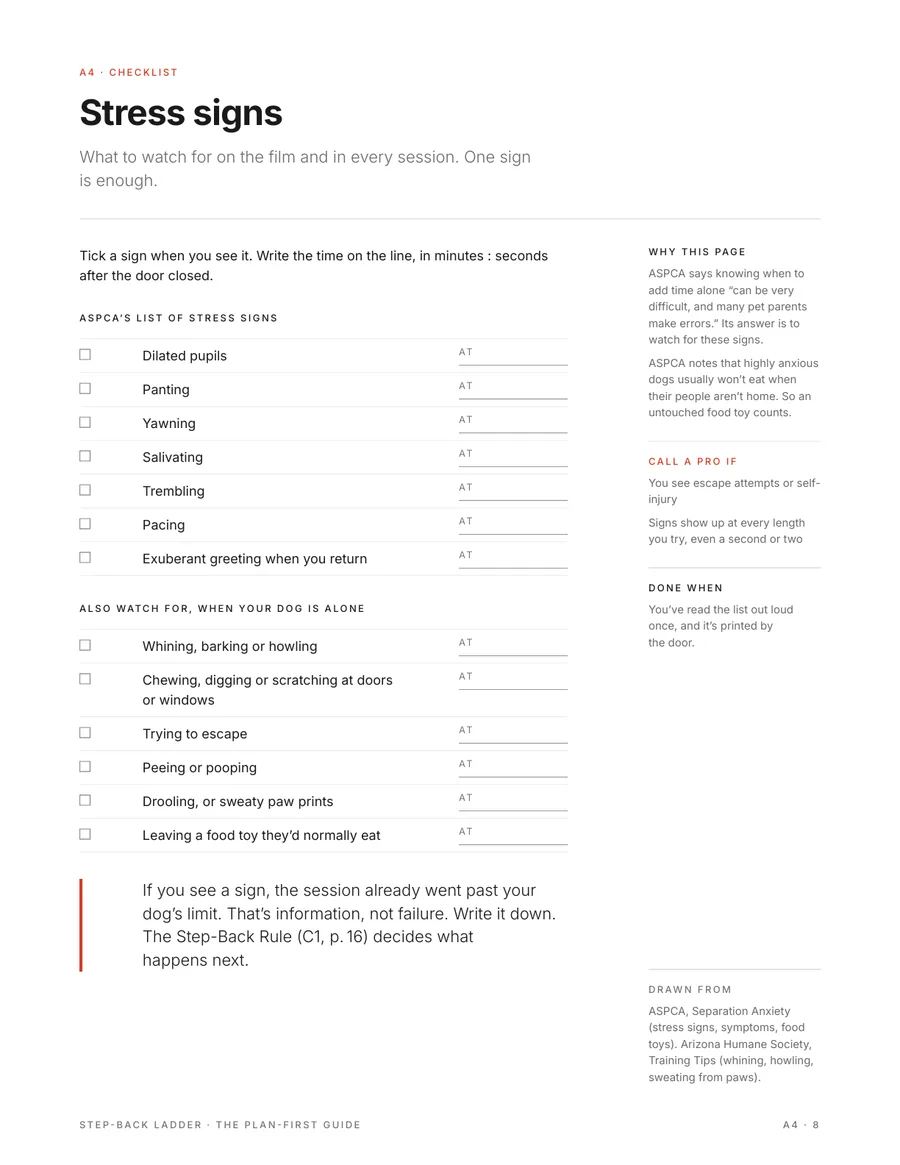
Film your dog for up to 10 minutes after you leave. Note the first stress sign. Your first practice absence starts below that point.
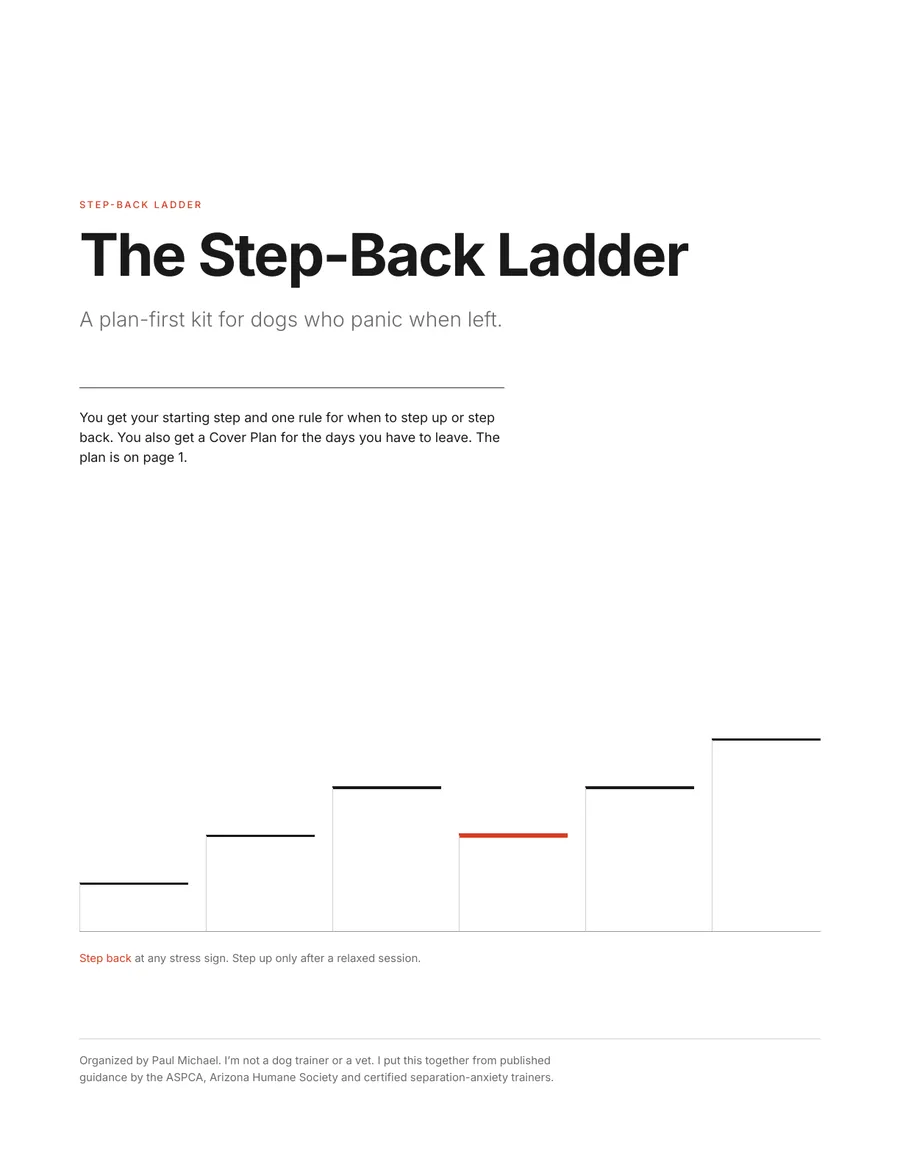
A plan-first kit for dogs who panic when left. You get your starting step. You get one rule for when to step up and when to step back. And you get a Cover Plan for the days you have to leave.
The Plan-First Guide: a 26-page PDF kit for dogs who panic when left.
At checkout you can add the Ladder Toolkit for $17. It's optional. The guide works on its own.
The order is the method. Each step is a page you fill in.
Film your dog for up to 10 minutes after you leave. Note the first stress sign. Your first practice absence starts below that point.
The ASPCA's advice: while you train, only leave your dog alone during practice. The Cover Plan gives every trip out a name: who or what covers it.
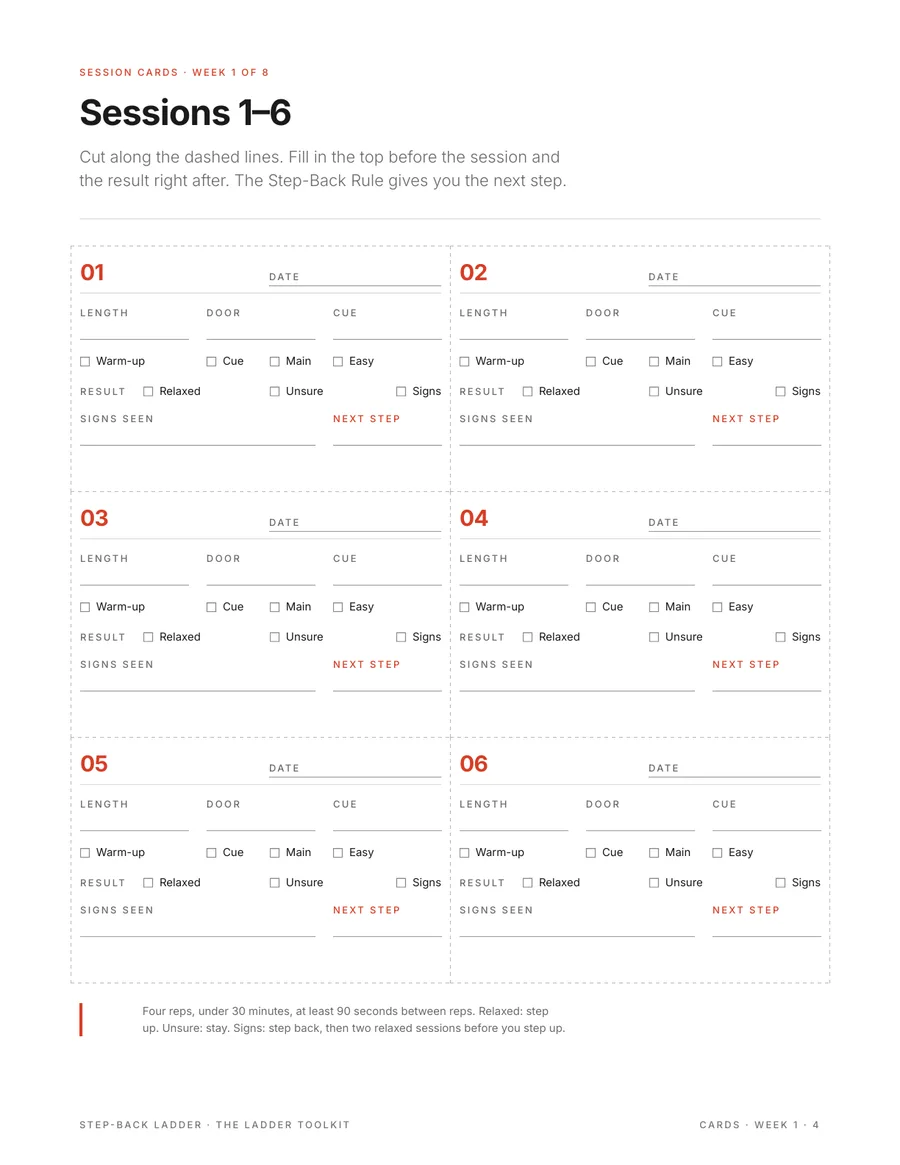
Step up only after a relaxed session. Step back at any stress sign. One card by the door tells you which.
This kit is new. No one has bought it yet, so there are no reviews on this page. I won't make any up.
I'm a dog owner, not a trainer or a vet. I can't promise your dog will be calm by a set date. No honest person can. The ASPCA says “there are no standard timelines.”
What I can show you is what it's built on, and the real pages. Both are below. If the kit isn't what this page says, email me within 14 days and you'll get your money back.
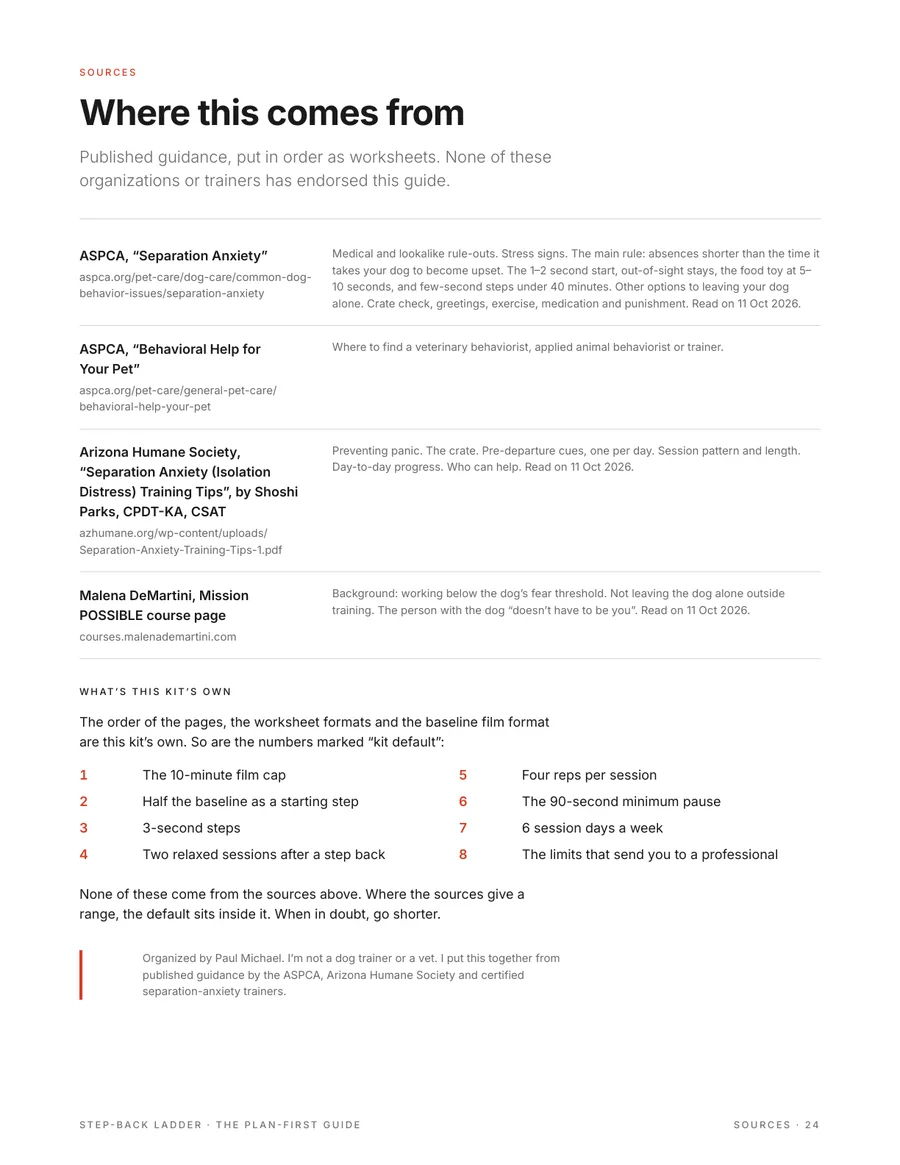
Each step in the guide comes from one of these. Page 24 lists them all.
“plan your absences to be shorter than the time it takes for your dog to become upset.”
ASPCA, Separation Anxiety
“In order to overcome panic, we must prevent panic from happening.”
Training tips by Shoshi Parks, CPDT-KA, CSAT, for Arizona Humane Society (PDF)
“training plans that ensure the dog always stays below his/her fear threshold.”
Malena DeMartini, Mission POSSIBLE course page
These groups didn't make, review or endorse this kit. I quote them so you can check the source yourself.
See your vet first to rule out medical causes. If your dog is injuring themselves, trying to escape through windows or doors, or not eating when alone, talk to your vet or a veterinary behaviorist now.
Moderate and severe cases do best with a professional. ASPCA recommends working with a qualified behavior professional (and a vet for any medication). This kit gets you organized and started. For moderate or severe cases, bring it to a certified trainer or a veterinary behaviorist.
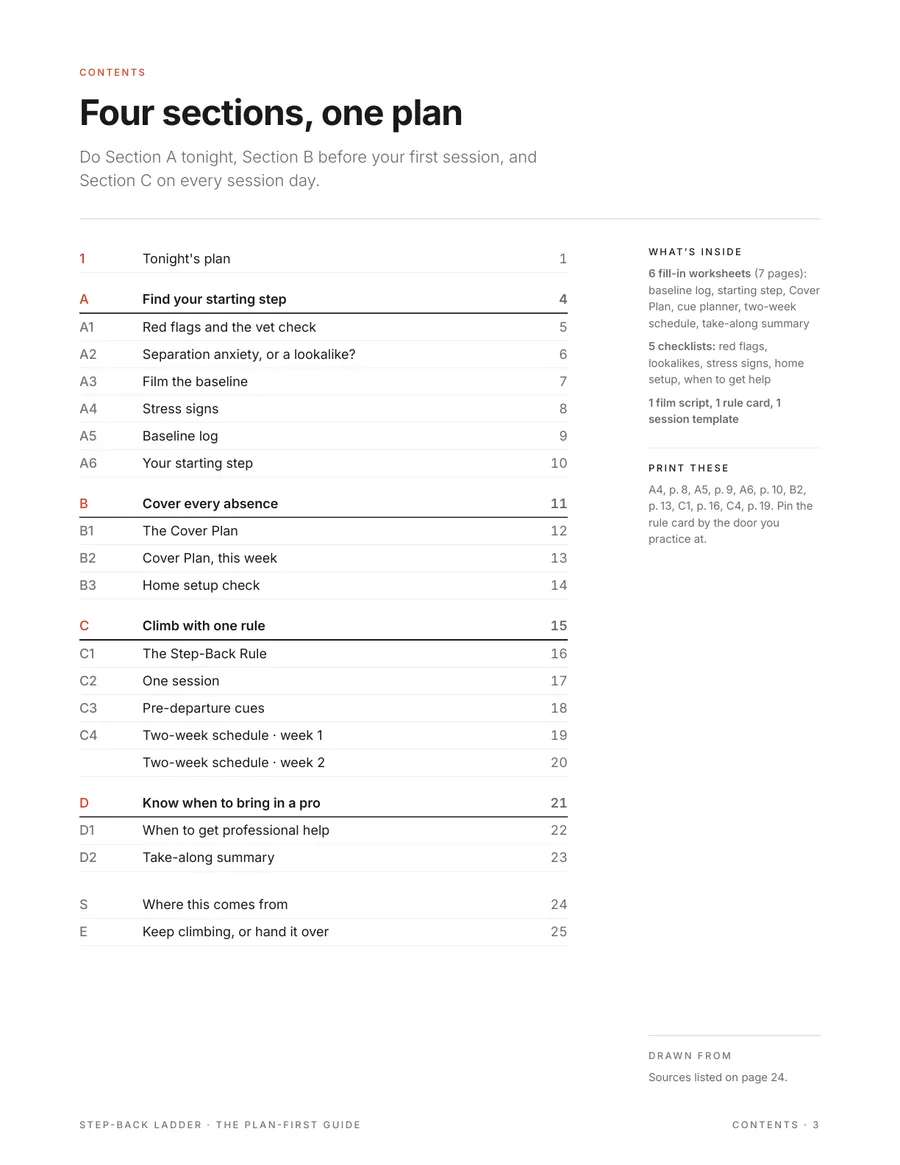
Four sections. Do Section A tonight, Section B before your first session, and Section C on every session day.
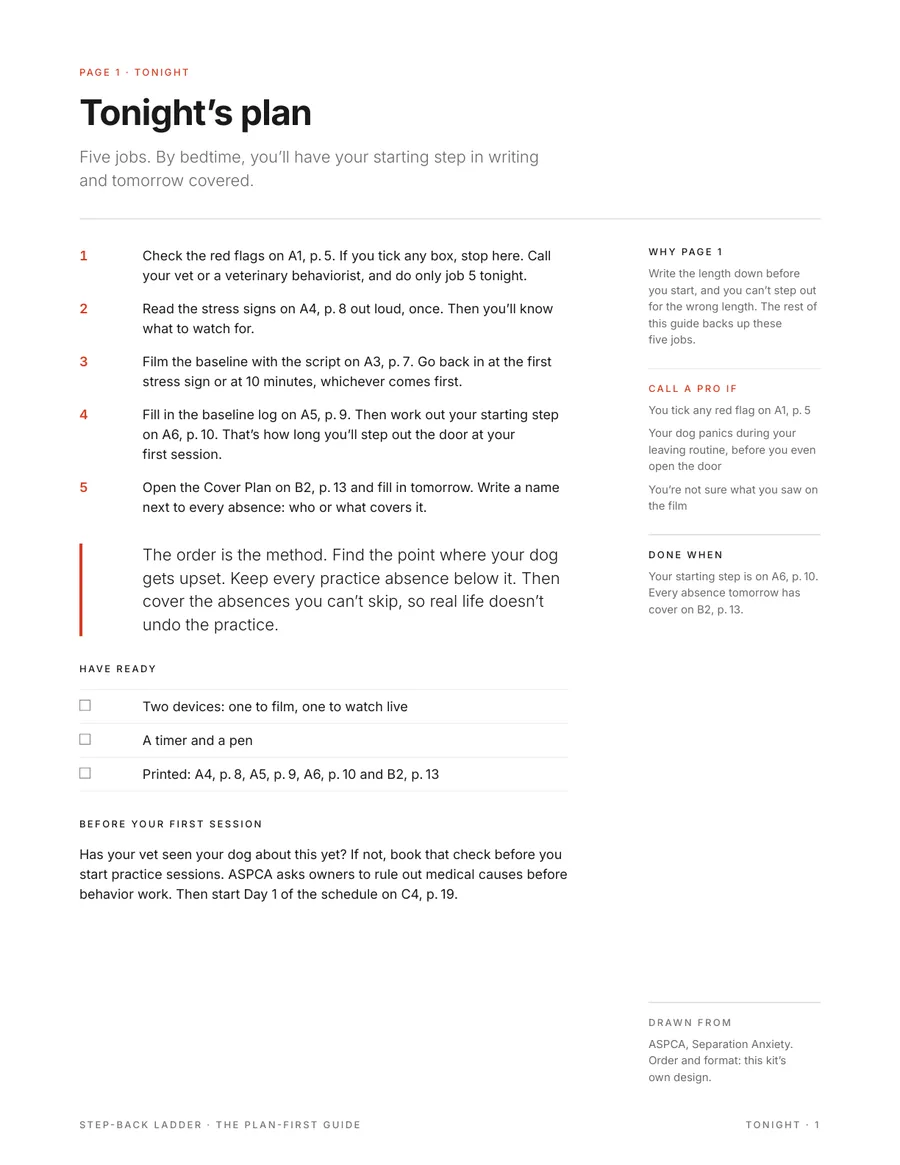
Five jobs for tonight. By bedtime, your starting step is in writing and tomorrow is covered.
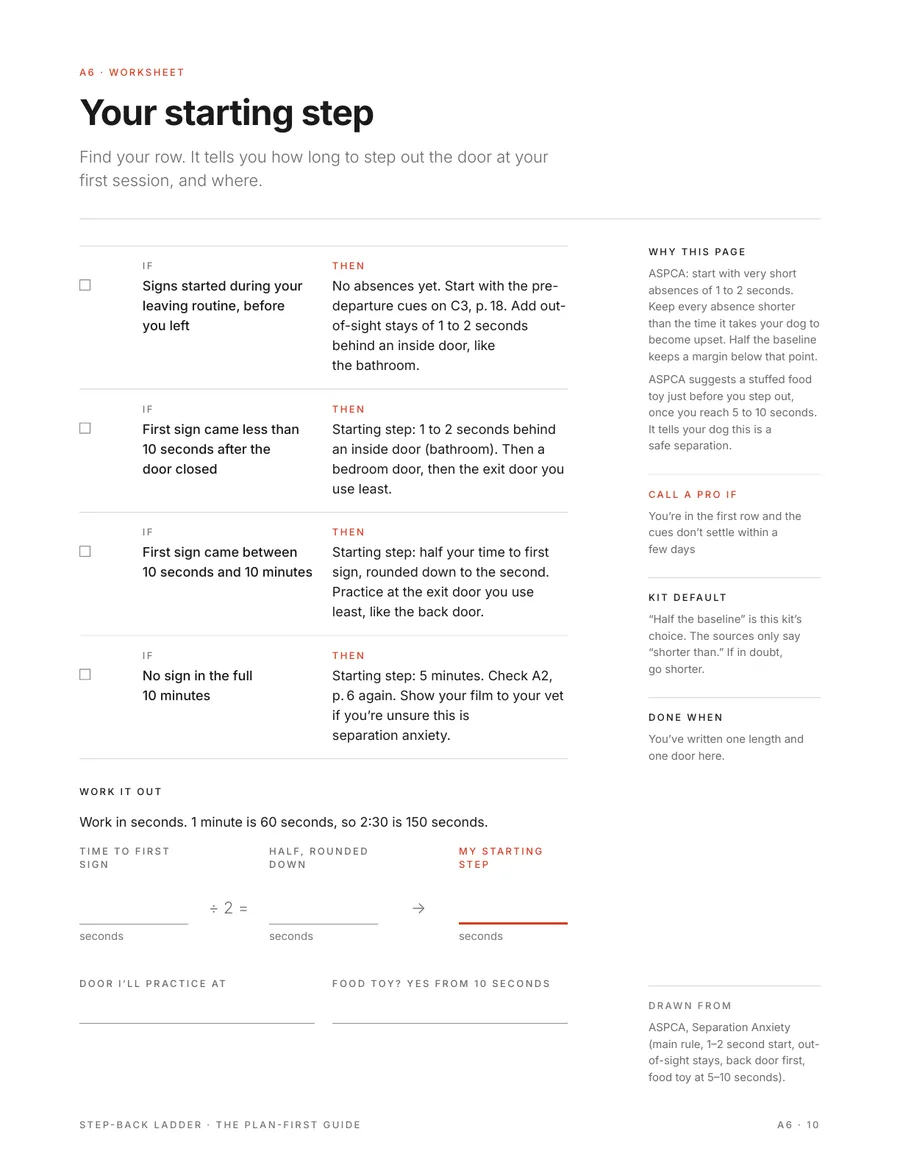
Turn your short film into the length of your first practice absence. You write it down before you start.
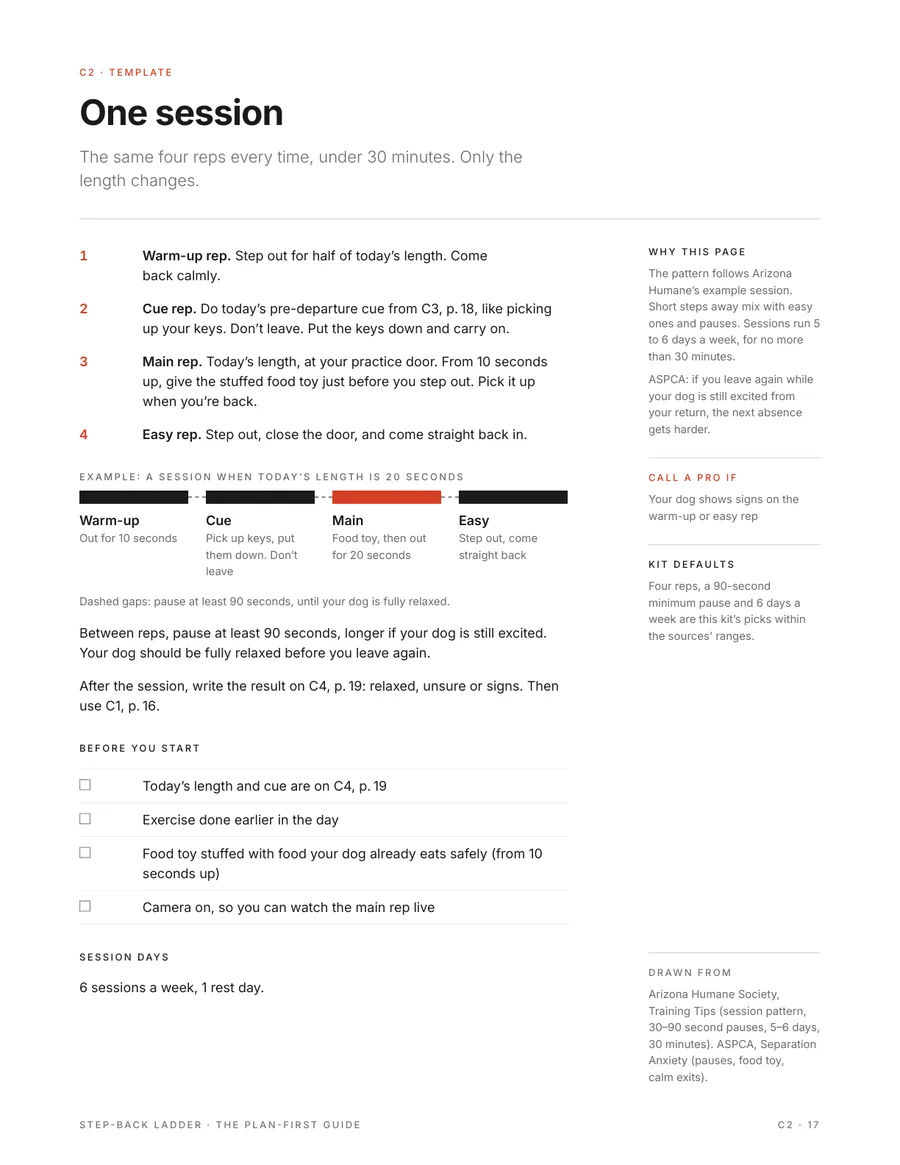
One card for the door. Relaxed? Step up. Unsure? Stay. Any stress sign? Step back.
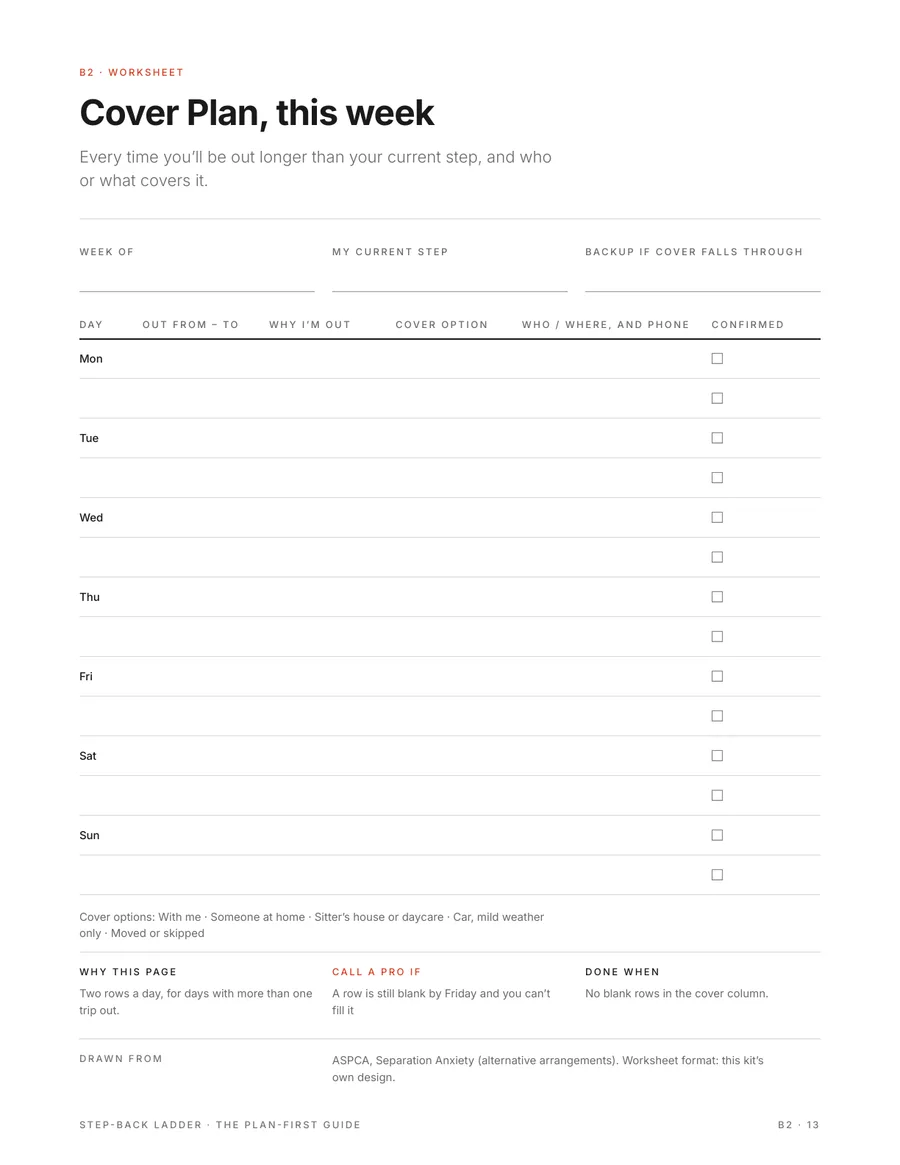
Write a name next to every trip out: who or what covers it, so real life doesn't undo the practice.
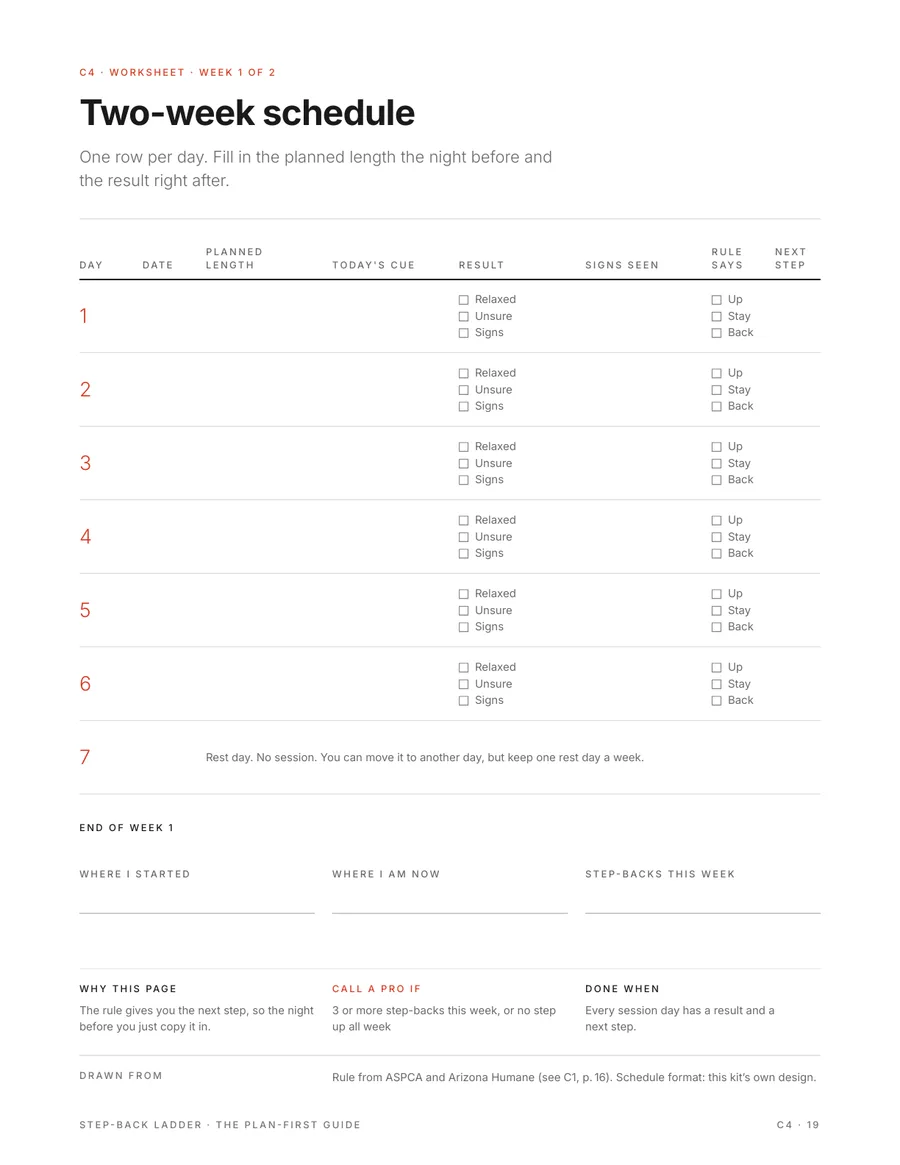
Fill in each session as you go, so you can see where you are and what comes next.
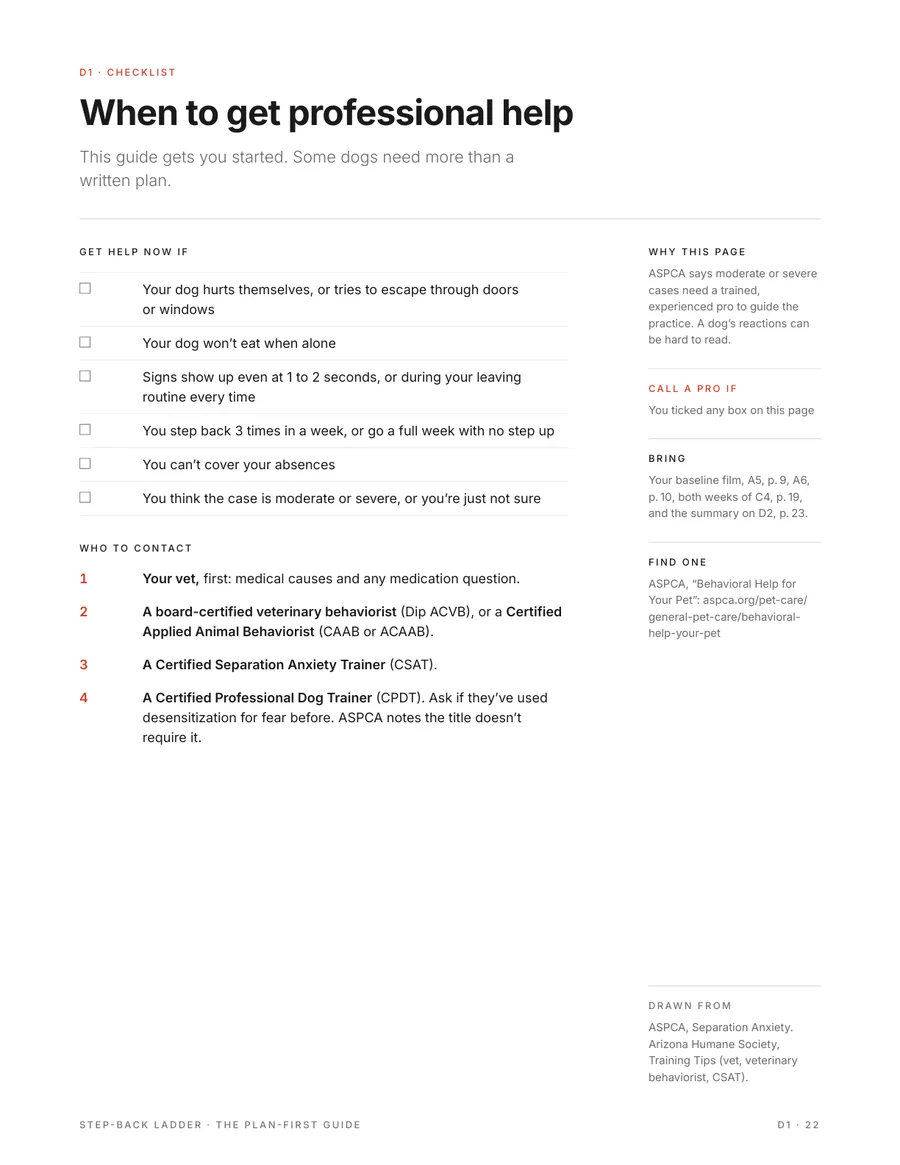
Clear signs that it's time for a pro, plus a one-page summary to take to your vet or trainer.
26 pages in all: 6 fill-in worksheets, 5 checklists, 1 film script, 1 rule card, 1 session template and a sources page.
Real pages from the PDF you download, shown as they are. Tap any page to see it full size.
Swipe to see more pages.
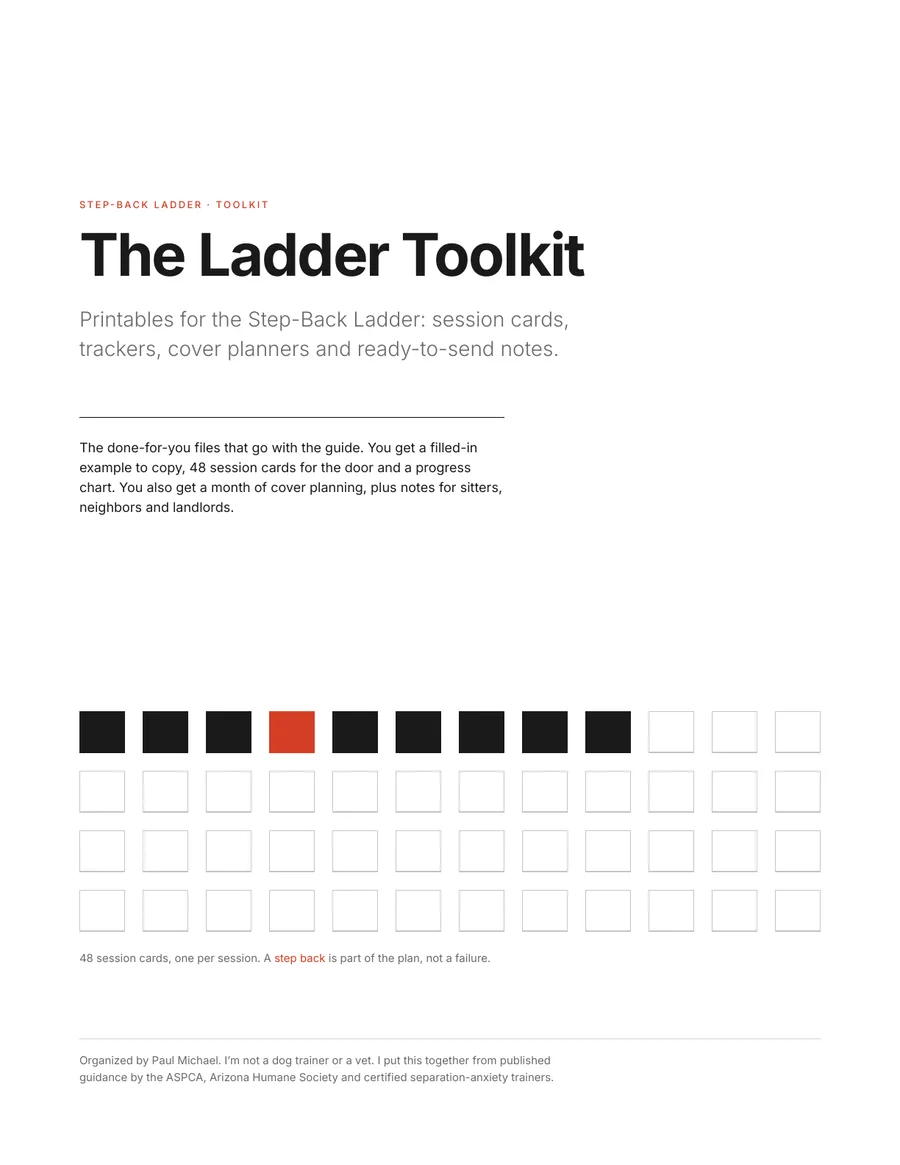
The done-for-you printables that go with the guide. Less setup, more sessions.
Subject: I'm not a trainer. That's why the sources are on every page.
I'm Paul Michael. I'm not a dog trainer or a vet. I'm just a guy who wanted to fix my dog's separation anxiety.
I went looking for help and found it scattered all over the place. I talked to friends. I read posts from other dog owners. They had tried the toys, the crate and the music. Nothing really helped. They were all stuck, like me. One wrote, “still our record time for leaving her alone is 30 minutes.”
The steps that help are already out there, from groups like the ASPCA and from certified trainers. I wanted them in one place, in order, with the plan up front. So I put them on fill-in pages. Page 1 is tonight's plan. Each page says where its steps come from.
Here's how this works as a business, so there are no surprises. The kit is $27. At checkout, you can add the Toolkit for $17. Later, I plan to offer a video walk-through of the worksheets. I also plan to offer help from a certified trainer for harder cases. Neither is for sale yet. You don't need them to use this kit.
— Paul Michael

No kit can promise that, and I won't. This is a written plan built from published guidance. How your dog does depends on your dog. If the plan isn't what this page says, you get your money back.
No one can tell you that. Be wary of anyone who gives you a number. ASPCA says “there are no standard timelines.” Published guidance suggests short sessions, 5 to 6 days a week, for up to 30 minutes.
Moderate and severe cases do best with a professional. ASPCA recommends working with a qualified behavior professional (and a vet for any medication). Is your dog hurting themselves, trying to get out through a door or window, or not eating when alone? Call your vet or a veterinary behaviorist now. This kit can still help you keep notes to bring with you. It can't tell you how severe your case is.
That's what the Cover Plan is for. The ASPCA's advice: while you train, only leave your dog alone during practice. It lists ways to cover the rest: a sitter, family, a friend, daycare, or taking your dog to work. The Cover Plan helps you put a name next to each trip out.
Nothing else is a must. You'll need a phone to film, a second device to watch live, a timer and a pen. A printer helps but isn't a must. The Toolkit is an optional $17 add-on. A vet visit, if you haven't had one about this yet, is its own cost.
It's a PDF kit, not coaching. Nothing ships and no one has to call you. I want it to be easy to try.
Right after you pay, you land on a page with your download. Stripe also emails you a receipt. Lost the page? Reply to the receipt or email [email protected] and I'll send the files.
Email within 14 days of buying and you'll get your money back. No questions asked. The refund covers what you bought, the PDFs. It doesn't depend on how your dog behaves. See the refund policy.
Not ready? Get the free Baseline Kit first.